The influence of West Indian music on white British youth can be traced way back to the arrival of the early immigrants from that region.
They were persuaded to come by the British government to do the work for which there were not enough locals. I suspect that they thought they were coming to the land of milk and honey, but alas found themselves in a severely depressed post-war UK. The locals were not always as welcoming as the government, the work was often menial, the housing poor, or difficult to find, and the weather atrocious.
They missed home.
They turned to their religion, and their music to alleviate the greyness, and depression they found themselves in. Enterprising individuals started to import records from the islands. Records by Mento, Calypso and most importantly Ska artists. Some West Indians found that organising Blues Parties was a good way to pay the rent. You put a record player in a room, get a selection of those "from home" records and charge entry.
In the early 1960s the UK youth movements of the time were either Mods or Rockers. Rockers rode motorbikes wore leathers, and loved Rock'n'Roll. On the other hand Mods were into smart clothing, scooters, and R&B, Soul and something called Bluebeat. Blue Beat was a record label that released the earliest forms of what became Ska. The Mods heard this new music through contacts in record stores, or from being lucky enough to be invited to a Blues Party.
My the late 1960s Mods had disappeared to be replaced by Skinheads. Ska music was an essential component to any Skinhead club, or party. The growth in popularity of Ska was also helped by the Pirate Radio stations playing records from the likes of Prince Buster, The Skatalites, The Pioneers, Desmond Dekker, and Dave and Ansell Collins.
Then in the 1970s Bob Marley happened and everyone knew about Reggae, the genre that emerged from Ska. Jamaican producers like Lee 'Scratch' Perry, King Tubby, and The Scientist developed a sub-genre of Reggae called Dub. They would take the recordings, and remove the majority, it not all, of the vocal, and bring the rhythm section to the front. Dub is heavy on the Bass.
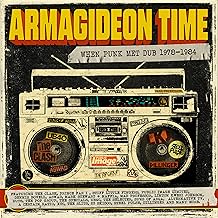
By the mid 70s Punks had become the dominant youth movement in the UK, and integration of black and white youth was prevalent. Dub and Reggae had an influence on some Punk musicians, and also there was some interest in Punk from the Reggae and Dub musicians. This is where Armagideon Time - When Punk Met Dub (1978-1984), a 3CD box set comes in. Cherry Red have collected together 57 tracks to document the music from this period. Including tracks from PiL, Prince Far I, The Specials, Dennis Bovell, The Pop Group, Linton Kwesi Johnson, The Selecter, Thompson Twins, XTC, Alternative TV, Aswad, Dillinger, A Certain Ratio, Stiff Little Fingers, UB40, The Jam, Mad Professor, The Ruts, and The Clash, and many more. In fact The Clash's song Armagideon Time gives this anthology its tile.
As usual there is a fine booklet with information about each track, and an interesting introduction from Jah Wobble.
Cheery Red see Armagideon Time as a companion to 2024's Roots Rock Rebels - When Punk Met Reggae 1975-1982, another 3CD collection they released.
Ownsership of them both would give any listener an excellent grounding of the genres from this 70s-80s time period.
You can hear some of the songs in The Groove Yard visit 223
And for a full track listing, and other information, go to the Cherry Red Records website.
For information on the companion release Roots Rock Rebels